


10 Aug
0 Comments
151 Views
<h3><font color="#21104a"><b>Tie
or bow tie? The complete guide to making the right choice and styling it</b></font></h3>
<p><font color="#21104a">Some
details in menswear may seem small but make a huge difference. Ties
and bow ties are exactly that kind of accessory.</font></p>
<p><font color="#21104a">They
do more than simply complement a shirt and suit. When chosen well, they can enhance
facial features, balance proportions and give the entire outfit
a polished, confident look.</font></p>
<p><font color="#21104a">But
which one should you choose?<br>
The answer depends on the occasion, the suit, the shirt and the overall impression you
want to create.</font></p>
<p><font color="#21104a">In
this guide, you will find practical advice on choosing, matching and wearing
these two classic men's accessories – as well as the most popular tie
knots.</font></p>
<div align="center"><font color="#21104a">
<hr size="2" width="100%" align="center">
</font></div>
<h4><font color="#21104a"><b>Tie
or bow tie – what is the difference?</b></font></h4>
<p><font color="#21104a">Ties
and bow ties share one purpose – to complete your look and add character
to your outfit. However, the two accessories create different impressions and
play different roles in men's style.</font></p>
<p><font color="#21104a"><b>The tie
– a versatile classic</b></font></p>
<p><font color="#21104a">The tie
is the more versatile choice. It adapts easily to a range of styles – from
classic business attire and formal suits to a more relaxed smart casual
look.</font></p>
<p><font color="#21104a">Its
greatest advantage is its variety. You can completely transform the character of
your look simply by choosing a different colour, pattern, fabric or knot.</font></p>
<p><font color="#21104a">A dark,
plain tie creates a more polished, professional impression, while
a lighter colour, subtle texture or understated pattern can add more
individuality.<br><br></font></p>
<p><font color="#21104a"><b>The bow tie
– a statement with character</b></font></p>
<p><font color="#21104a">The bow tie
has a more distinctive presence. It draws attention to the face and
naturally becomes the focal point of the look.</font></p>
<p><font color="#21104a">Unlike
a tie, which can serve as an almost unnoticeable finishing
touch, a bow tie is more often the element that defines the character of the entire
outfit.</font></p>
<p><font color="#21104a">It
conveys elegance, individuality and a sense of occasion, but can also look
contemporary when paired with a crisp shirt, a well-fitting jacket and
carefully chosen accessories.<br><br></font></p>
<p><font color="#21104a"><b>Which
option is more versatile?</b></font></p>
<p><font color="#21104a">If
you want an accessory that you can wear on more occasions and style in
different ways, the tie is the more versatile choice.</font></p>
<p><font color="#21104a">If
you want your accessory to stand out and give your
look a stronger sense of character, the bow tie is the bolder choice.</font></p>
<p><font color="#21104a">This
does not mean that one accessory is more elegant than the other. What matters more is that it
complements the outfit, the occasion and the overall impression.</font></p>
<p><font color="#21104a"><b>The simplest
rule:<br>
A tie offers classic style and versatility. A bow tie adds character and makes a statement.</b></font></p>
<div align="center"><font color="#21104a">
<hr size="2" width="100%" align="center">
</font></div>
<p><font color="#21104a"><b>Tie or bow tie for different occasions?</b></font></p>
<p><font color="#21104a"><b>Business
meeting<br></b>For
a business meeting, classic style works best. Choose a plain tie in
navy, burgundy, charcoal or another deep, understated colour.</font></p>
<p><font color="#21104a">Pair
it with a white or light blue shirt and a well-fitting suit. If the setting is
more conservative, avoid overly bright colours, large patterns and excessively
shiny fabrics.</font></p>
<p><font color="#21104a">Suitable
knot: Four-in-Hand or Half Windsor.<br><br></font></p>
<p><font color="#21104a"><b>Wedding</b></font></p>
<p><font color="#21104a">A wedding
allows for more freedom and is a wonderful opportunity to add colour or texture to
your look.<br>For
a daytime wedding, opt for lighter shades, subtle textures and understated
patterns, while an evening event allows for deeper, richer colours.</font></p>
<p><font color="#21104a">Burgundy,
navy, green and delicate pastel shades can all look excellent,
depending on the suit and the overall look.</font></p>
<p><font color="#21104a">A bow tie
is also an excellent choice, particularly for an evening, more formal or themed wedding.<br><br></font></p>
<p><font color="#21104a"><b>Formal
dinner</b></font></p>
<p><font color="#21104a">For
a formal dinner, a silk tie in a deep, rich colour is a classic and
elegant choice.<br>Here
you can opt for a little more texture or a subtle sheen, particularly when
the event is held in the evening.<br>If
the dress code is more formal, a bow tie can make a stronger statement and
give the look a more polished, celebratory feel.<br><br></font></p>
<p><font color="#21104a"><b>Dinner suit<br></b>Here,
the rule is clear:</font></p>
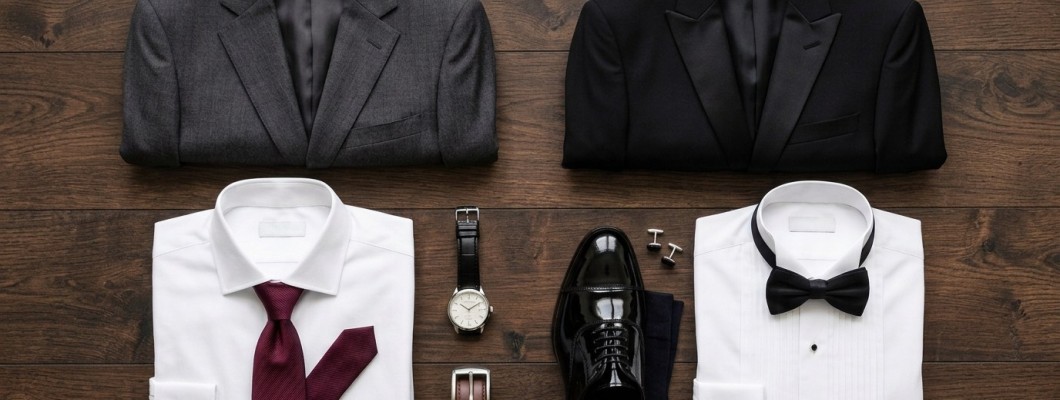
<p><font color="#21104a"><b>A dinner suit
is worn with a bow tie</b>.</font></p>
<p><font color="#21104a">For
classic Black Tie dress codes, a black bow tie is the standard and safest
choice. Pair it with a formal white shirt and a dinner jacket, ensuring that the
other accessories also match the formality of the outfit.</font></p>
<p><font color="#21104a">With
a dinner jacket, avoid overly colourful or patterned bow ties unless the specific
dress code or event allows for a more relaxed interpretation. </font></p>
<div align="center"><font color="#21104a">
<hr size="2" width="100%" align="center">
</font></div>
<h4><font color="#21104a"><b>How
to choose a tie to match your suit?</b></font></h4>
<p><font color="#21104a">The colour
of your suit is one of the best starting points when choosing a tie.
The aim is not simply to make the two pieces look different, but to create a harmonious
contrast with the shirt and the rest of the outfit.</font></p>
<p><font color="#21104a"><b>Black
suit<br></b>A black
suit is a classic choice that allows for a wide range of combinations.<br>Suitable
tie colours include:</font></p>
<ul type="disc"><li><font color="#21104a">burgundy</font></li><li><font color="#21104a">navy blue</font></li><li><font color="#21104a">charcoal</font></li><li><font color="#21104a">silver</font></li><li><font color="#21104a">black</font></li></ul>
<p><font color="#21104a">For
a formal evening look, choose a silk tie with a subtle sheen.
With a black suit and white shirt, richer colours create an elegant and clearly
defined accent.<br><br></font></p>
<p><font color="#21104a"><b>Navy
suit<br></b>A navy
suit is one of the most versatile choices in a man's wardrobe. It works with
both classic and bolder colour combinations.</font></p>
<ul type="disc"><li><font color="#21104a">Suitable colours include:</font></li><li><font color="#21104a">burgundy</font></li><li><font color="#21104a">navy blue</font></li><li><font color="#21104a">dark green</font></li><li><font color="#21104a">brown</font></li><li><font color="#21104a">lighter shades of blue</font></li></ul>
<p><font color="#21104a">For
a classic and timeless combination, choose a white shirt, navy suit and
burgundy tie.<br><br></font></p>
<p><font color="#21104a"><b>Grey
suit<br></b>Grey
offers plenty of freedom when choosing a tie and can serve as either the foundation
for a clean look or the backdrop for a stronger pop of colour.<br>Suitable
colours include:</font></p>
<ul type="disc"><li><font color="#21104a">burgundy</font></li><li><font color="#21104a">navy blue</font></li><li><font color="#21104a">black</font></li><li><font color="#21104a">dark green</font></li><li><font color="#21104a">silver</font></li></ul>
<p><font color="#21104a">With
a lighter grey suit, choose deeper, richer colours for
more pronounced contrast. With a dark grey suit, both rich shades
and more neutral tones work beautifully.<br><br></font></p>
<p><font color="#21104a"><b>Brown
suit<br></b>A brown
suit pairs particularly well with warm, earthy and deep colours.<br>Suitable
colours include:</font></p>
<p><font color="#21104a">· burgundy</font></p>
<p><font color="#21104a">· dark green</font></p>
<p><font color="#21104a">· navy blue</font></p>
<p><font color="#21104a">· beige</font></p>
<p><font color="#21104a">· caramel
and other earthy shades</font></p>
<p><font color="#21104a">For
a more elegant look, choose a tie with a fine texture or subtle pattern
that complements the suit's warm character.</font></p>
<p><font color="#21104a"><b>One simple
rule that always works</b></font></p>
<p><font color="#21104a">Do not
choose your tie in isolation from the rest of your outfit. The suit, shirt and
tie should work together.<br>If
the suit has a rich colour or noticeable texture, a simpler tie is
usually the better choice. If the suit and shirt are plain, you can
add character through the tie's colour, texture or subtle pattern.</font></p>
<div align="center"><font color="#21104a">
<hr size="2" width="100%" align="center">
</font></div>
<h4><font color="#21104a"><b>How
to pair a tie with a shirt?</b></font></h4>
<p><font color="#21104a">The shirt
and tie are the two elements that most strongly define the look around
your face. A good combination therefore involves more than colours simply “matching”;
it requires balance between colour, pattern and texture.</font></p>
<p><font color="#21104a"><b>White
shirt – the classic choice that is hard to get wrong<br></b>A white
shirt is the most versatile foundation for a tie.<br>You can
pair it with almost any colour – from navy blue and burgundy to green, brown,
grey and bolder shades.<br>With
a plain white shirt, you can also opt for a more interesting texture or subtle
pattern on the tie.</font></p>
<p><font color="#21104a"><b>Classic
combination:<br>
</b>white shirt + navy suit
+ burgundy tie.<br><br></font></p>
<p><font color="#21104a"><b>Light blue
shirt – soft contrast and elegance<br></b>A light blue
shirt pairs beautifully with deeper, richer colours.</font></p>
<p><font color="#21104a">Particularly
suitable colours include:</font></p>
<ul type="disc"><li><font color="#21104a">navy blue</font></li><li><font color="#21104a">burgundy</font></li><li><font color="#21104a">charcoal</font></li><li><font color="#21104a">dark green</font></li><li><font color="#21104a">brown</font></li></ul>
<p><font color="#21104a">The
lighter the shirt, the easier it is to create an elegant contrast with a
darker tie.<br><br></font></p>
<p><font color="#21104a"><b>Striped
shirt – pay attention to scale<br></b>A striped
shirt does not mean you have to wear a plain tie. You can
combine two patterns, but they should differ in scale and direction.</font></p>
<p><font color="#21104a">For example,
a finely striped shirt can be paired with a tie featuring a larger, understated
pattern.<br>If
you are unsure about the combination, a plain tie remains the safest
choice.</font></p>
<p><font color="#21104a"><b>Checked
shirt – opt for a more understated tie<br></b>Checks
already provide plenty of visual interest. A solid-colour tie or one with a
very subtle pattern will therefore usually look more balanced.<br>Here,
texture can be an excellent way to add character without overwhelming the
outfit.</font></p>
<p><font color="#21104a"><b>How
should you approach patterns?</b></font></p>
<p><font color="#21104a">The basic
rule is simple:</font></p>
<p><font color="#21104a"><b><i>The bolder the shirt, the more understated the
tie should be.</i></b></font></p>
<p><font color="#21104a">This
does not mean you need to avoid combining patterns altogether. The key is to
keep them well balanced.</font></p>
<p><font color="#21104a"><b>Avoid
combining:</b></font></p>
<p><font color="#21104a"><b>a patterned
shirt + a patterned tie + a patterned suit.</b></font></p>
<p><font color="#21104a">Three
bold patterns usually create more visual noise than style.</font></p>
<p><font color="#21104a"><b>What
about matching colours?<br></b>You can
wear a tie in a shade similar to your shirt, but avoid creating
one continuous block of colour.</font></p>
<p><font color="#21104a">For example,
a navy tie with a light blue shirt creates sufficient contrast, while
a navy shirt with an almost identical navy tie can look flat.</font></p>
<p><font color="#21104a"><b>Remember:</b> a good combination does not have to be
contrasting, but there should be enough variation in shade, texture or
pattern for the individual elements to stand out.</font></p>
<div align="center"><font color="#21104a">
<hr size="2" width="100%" align="center">
</font></div>
<h4><font color="#21104a"><b>Choosing a tie
for your shirt collar</b></font></h4>
<p><font color="#21104a">The shirt
collar is a small detail that often goes unnoticed, yet it has a major
impact on how the tie knot looks. The size and shape of
the knot should suit the space between the collar points.</font></p>
<p><font color="#21104a"><b>Classic
collar<br></b>A classic
collar offers plenty of flexibility. The most versatile choices are the Four-in-Hand and Half
Windsor, depending on the desired level of formality.</font></p>
<p><font color="#21104a"><b>Spread
collar<br></b>With
a wider collar, you can opt for a fuller, more symmetrical knot. The Half Windsor and Full
Windsor fill the space between the collar points and create a more balanced look.</font></p>
<p><font color="#21104a"><b>Cutaway
collar<br></b>The wide
spread of a cutaway collar allows for a larger, well-structured
knot. The Full Windsor is a suitable choice when you want a more formal and
symmetrical appearance.</font></p>
<p><font color="#21104a"><b>Button-down
collar<br></b>A button-down
collar has a more relaxed character and usually looks best with a smaller,
naturally shaped knot. The Four-in-Hand is an excellent choice for this type of shirt.</font></p>
<p><font color="#21104a"><b>The basic
rule:</b> the size of the knot
should visually fill the space between the collar points without looking
too large or heavy.</font></p>
<div align="center"><font color="#21104a"><b>
<hr size="2" width="100%" align="center">
</b></font></div>
<h4><font color="#21104a"><b>Silk,
knitted or textured tie?</b></font></h4>
<p><font color="#21104a">The fabric
and texture of a tie can completely transform the character of the very
same outfit. Your choice should therefore be based on more than colour alone.</font></p>
<p><font color="#21104a"><b>Silk
tie<br></b>Silk
is the classic choice for elegant and formal outfits. It has a smooth surface and
a natural sheen that pairs particularly well with a suit.</font></p>
<p><font color="#21104a"><b>Knitted
tie<br></b>Knitted
ties have a more relaxed, contemporary feel. They are an excellent choice for smart
casual outfits, wearing a blazer without a matching suit and more informal occasions.</font></p>
<p><font color="#21104a"><b>Textured
tie<br></b>Texture
adds visual depth without necessarily requiring a bold pattern. This makes it
an excellent choice when your suit and shirt are plain but you want to add
interest to your outfit.</font></p>
<p><font color="#21104a"><b>Smooth
or with a lustrous finish?<br></b>Ties
with a more pronounced sheen are better suited to evening and formal occasions. For
daytime and business outfits, matt or lightly textured fabrics usually
look more natural.<br><br><a href="https://gentleman.bg/mazhki-aksesoari/vratovrazki" target="_blank">Explore our collection:</a></font></p>
<div align="center"><font color="#21104a"><b>
<hr size="2" width="100%" align="center">
</b></font></div>
<h4><font color="#21104a"><b>How
should a tie fit correctly?</b></font></h4>
<p><font color="#21104a">Even
the finest-quality tie will not look good if it is not tied and positioned
correctly. It is the small details that make the difference between simply
putting on an outfit and achieving a well-finished look.</font></p>
<p><font color="#21104a"><b>1.
The tip reaches the belt</b></font></p>
<p><font color="#21104a">When
you are standing upright, the tip of the tie should reach approximately the
top of your belt or the buckle.</font></p>
<p><font color="#21104a">A tie
that is too short or too long disrupts the proportions of the entire
outfit.</font></p>
<p><font color="#21104a"><b>2.
The knot should be snug</b></font></p>
<p><font color="#21104a">The tie
should sit snugly under the collar, without a large gap between the neck and the knot.</font></p>
<p><font color="#21104a">This
creates a neater, more polished appearance.</font></p>
<p><font color="#21104a"><b>3.
The narrow end should remain hidden</b></font></p>
<p><font color="#21104a">Once
tied, the narrow end of the tie should be tucked into the keeper loop on the back
of the wide end.</font></p>
<p><font color="#21104a">It
should not be visible or stick out at the side.</font></p>
<p><font color="#21104a"><b>4.
The tie should be centred</b></font></p>
<p><font color="#21104a">The knot
should sit directly beneath the centre of the collar. Even a slight shift can
disrupt the balance of the look.</font></p>
<p><font color="#21104a"><b>5.
Do not forget the dimple</b></font></p>
<p><font color="#21104a">With
classic knots, the small indentation directly below the knot – known as the dimple
– adds structure and a polished finish to the tie.</font></p>
<p><font color="#21104a">It
is not essential for every style, but with a classic suited look it is an elegant detail
that demonstrates attention to execution.</font></p>
<div align="center"><font color="#21104a">
<hr size="2" width="100%" align="center">
</font></div>
<h4><font color="#21104a"><b>4
classic knots every man should know</b></font></h4>
<p><font color="#21104a">You
do not need to know how to tie dozens of different knots. Four are more than
enough for almost any situation.</font></p>
<p><font color="#21104a"><b>1.
Four-in-Hand</b></font></p>
<p><font color="#21104a">The easiest
and most versatile choice.<br>The knot
is relatively small and slightly asymmetrical, giving it a natural, modern
appearance.</font></p>
<p><font color="#21104a"><b>Suitable
for:</b> the office, everyday wear, smart
casual looks and narrower collars.</font></p>
<p><font color="#21104a"><b>2.
Half Windsor</b></font></p>
<p><font color="#21104a">More symmetrical
and structured than the Four-in-Hand.<br>It
is one of the best all-round knots to wear with a suit.</font></p>
<p><font color="#21104a"><b>Suitable
for:</b> business meetings, formal
events and classic shirts.</font></p>
<p><font color="#21104a"><b>3.
Full Windsor</b></font></p>
<p><font color="#21104a">The Full
Windsor creates a large, substantial and symmetrical knot.<br>It
has a distinctly formal appearance and is suitable for shirts with wider collars.</font></p>
<p><font color="#21104a"><b>Suitable
for:</b> ceremonies, formal
events and special occasions.</font></p>
<p><font color="#21104a"><b>4.
Pratt</b></font></p>
<p><font color="#21104a">The Pratt
is a clean, symmetrical, medium-sized knot.<br>It
is an excellent alternative to the Half Windsor when you want a polished look without
an overly large knot.</font></p>
<p><font color="#21104a"><b>Suitable
for:</b> business wear, formal meetings
and classic suits. </font></p>
<div align="center"><font color="#21104a">
<hr size="2" width="100%" align="center">
</font></div>
<h4><font color="#21104a"><b>The bow tie
– how should you wear it?</b></font></h4>
<p><font color="#21104a">A bow tie
has one distinctive quality: it immediately becomes the focal point. Therefore,
the rest of the look should be well balanced.</font></p>
<p><font color="#21104a"><b>Size
matters<br></b>The bow tie
should be neither too small nor too large in relation to the face.<br>Visually,
it should sit within the width of the face and complement the shirt
collar.</font></p>
<p><font color="#21104a"><b>Black
or colourful?</b></font></p>
<p><font color="#21104a"><b>A black
bow tie</b> is the classic
choice for a dinner suit and highly formal events.</font></p>
<p><font color="#21104a">For
a wedding, cocktail event or a more modern look, you can experiment with:</font></p>
<ul type="disc"><li><font color="#21104a">burgundy</font></li><li><font color="#21104a">navy blue</font></li><li><font color="#21104a">green</font></li><li><font color="#21104a">brown</font></li><li><font color="#21104a">subtle geometric patterns</font></li></ul>
<p><font color="#21104a">The
bolder the colour or pattern of the bow tie, the more understated the
rest of the outfit should be. </font></p>
<div align="center"><font color="#21104a">
<hr size="2" width="100%" align="center">
</font></div>
<h4><font color="#21104a"><b>7
mistakes to avoid</b></font></h4>
<p><font color="#21104a"><b>1.
A tie that is too short</b><br>
The tip should reach approximately to the belt.</font></p>
<p><font color="#21104a"><b>2.
An oversized knot</b><br>
Match it to your collar and build.</font></p>
<p><font color="#21104a"><b>3.
Too many patterns</b><br>
Choose one main visual accent.</font></p>
<p><font color="#21104a"><b>4.
The wrong colour</b><br>
The tie should complement the suit and shirt.</font></p>
<p><font color="#21104a"><b>5.
A bow tie for the wrong occasion</b><br>
Not every formal occasion calls for a bow tie.</font></p>
<p><font color="#21104a"><b>6.
Too many accessories</b><br>
A watch, belt, shoes, tie and wallet are more than enough.</font></p>
<p><font color="#21104a"><b>7.
Ignoring the dress code</b><br>
The most stylish accessory is the one that suits the occasion.<b> </b></font></p>
<div align="center"><font color="#21104a">
<hr size="2" width="100%" align="center">
</font></div>
<h4><font color="#21104a"><b>Gentleman
Cheat Sheet: choose in 10 seconds</b></font></h4>
<p><font color="#21104a"><b><i>If you do not have time to think:</i></b></font></p>
<p><font color="#21104a">Business
→ tie<br>
Office → tie<br>
Wedding → tie or bow tie<br>
Dinner suit → bow tie<br>
Formal evening event → bow tie or elegant tie<br>
Smart casual → tie or no accessory</font></p>
<p><font color="#21104a"><b><i>And for the knot:</i></b></font></p>
<p><font color="#21104a">Natural
and modern → Four-in-Hand<br>
Versatile and balanced → Half Windsor<br>
Sharp and formal → Full Windsor<br>
Clean and symmetrical → Pratt</font></p>
<font color="#21104a"><br></font>
Write a comment