


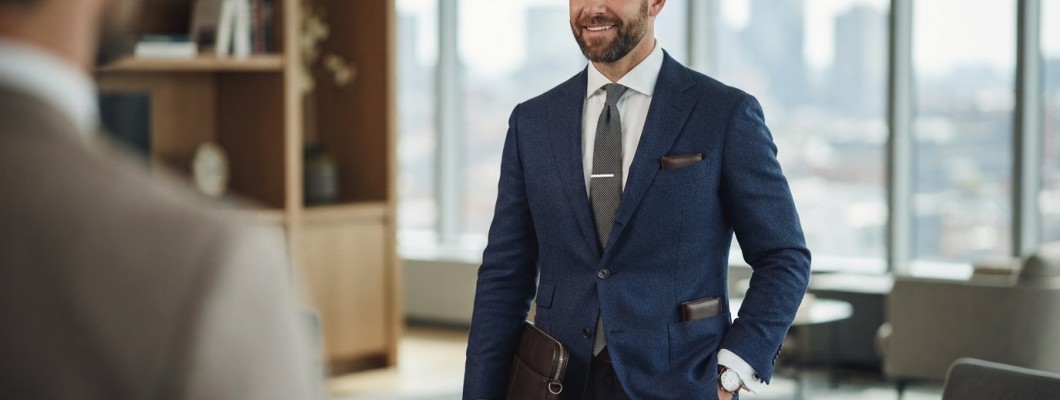
Men's Business Style: The Details That Make an Impression
In business, the first impression is made long before the conversation begins. The way a man dresses, the accessories he chooses and even how he looks after his clothes all say something about his attention to detail.
That doesn't mean every meeting calls for a full formal suit. Quite the opposite — modern men's business style increasingly leaves room for freedom, individuality and more relaxed combinations. What matters is that the look is put together, measured and suited to the occasion.
Because sometimes it's the small things that make the biggest impression.
What do business partners actually notice?
When you meet a new client, partner or colleague, they probably won't analyse each piece of your outfit separately. But the overall look leaves a feeling behind.
A well-chosen shirt, a tie that works with it, clean shoes, a stylish watch or a good wallet all create the impression of someone who knows what he's doing and pays attention to the details.
That's exactly why business style isn't simply about looking formal. It's a question of balance.
1. The shirt — the foundation of a good look
The shirt is one of the most visible elements of a man's business outfit. Even when you're wearing a jacket, it's the collar, the cuffs and the front of the shirt that stay in view.
When choosing one, pay attention to a few things: size, cut, colour and fabric.
The classic white shirt is a timeless choice and pairs easily with different suits, jackets and ties. Light blue and understated neutral shades are also an excellent option when you want a softer look that still reads as professional.
Most important of all is that the shirt fits well. Even the most expensive garment won't look elegant if it's too loose, too tight or simply wrong for your build.
2. The jacket — formal doesn't have to mean boring
A jacket is one of the easiest ways to make a look feel complete.
For a formal business meeting, classic dark colours are a safe choice. In a more relaxed business environment you can go for a jacket and trousers in different but well-matched tones.
The rule here is simple: not everything has to match, but everything has to look like part of the same outfit.
A well-chosen jacket can turn even a fairly plain shirt-and-trousers combination into a stylish business look.
3. The tie — a small detail with a big effect
The tie stopped being merely a compulsory part of formalwear a long time ago.
It can be the accent that gives the whole look its character.
For a stricter business style, classic colours work well — navy, burgundy, grey and discreet patterns. If the rest of the outfit is clean and simple, the tie can bring in a little more personality.
Just be careful not to let every element compete to be the star of the show.
If the shirt has a pattern, choose a plainer tie. If the suit is classic and solid-coloured, you can allow yourself a more interesting accent.
Good style doesn't shout. It gets noticed.
4. Cufflinks — the detail not everyone notices, but everyone remembers
This is where small details really start to count.
Cufflinks are a discreet accessory that can add a sense of completeness to a formal look. They aren't compulsory, and that's precisely what makes them interesting — they're worn by a man who chooses his details deliberately.
For a business meeting there's no need for accessories to be showy. An elegant pair of cufflinks in a classic design is enough to give the outfit some individuality.
And when the rest of the look is understated, that small accent can make an impression precisely because it's so measured.
5. Trousers and shoes — the basics that often get overlooked
Attention tends to go to the shirt, the jacket and the accessories, while the trousers stay in the background.
That's a mistake.
The right length, cut and condition of your trousers matter just as much to the overall look. The same goes for shoes.
Shoes don't have to be the most expensive part of the outfit. But they do need to be clean, well kept and right for the rest of the look.
Classic leather shoes are the natural choice for a formal meeting, while business casual combinations leave room for more relaxed models.
6. Your bag and wallet say something too
When you walk into a meeting with a laptop, documents, business cards and personal items, your bag inevitably becomes part of the overall impression.
An old, worn-out bag can undo an otherwise perfectly chosen outfit.
An elegant men's bag is a practical accessory, but it also completes the business look. The same is true of the wallet.
These are things you use every day, and their quality and condition show your attitude to detail even when you're not thinking about it.
7. Glasses — style and function in one
If you wear glasses, they naturally become part of your personal style.
With sunglasses, the right model can add character to your look, especially outside the office — at a business lunch, while travelling or at a more informal meeting.
The rule of balance applies here too. If your clothes are more distinctive, choose a more classic accessory. If the look is minimalist, the glasses can be the accent.
8. Don't overdo the details
One of the most common mistakes in men's style is wanting everything to be impressive at once.
A boldly patterned jacket, a colourful shirt, a contrasting tie, a large watch, chunky shoes and a pile of accessories can turn an elegant look into an overloaded one.
In business, the opposite approach usually works better.
Choose one or two accents and let the rest of the elements support them.
That could be an interesting tie with stylish cufflinks. Or a classic suit paired with a striking wallet and a good pair of glasses.
9. Good style is also a matter of upkeep
Even the best-chosen outfit won't look good if the clothes are creased, the shoes are neglected or the accessories are visibly worn.
Style doesn't end at the purchase.
Shirts need to be properly pressed. Jackets and trousers need to be stored correctly. Shoes need looking after. Accessories deserve attention too.
These small habits don't take much effort, but they make a difference.
10. The most important detail — confidence
In the end, clothes are only part of the impression.
The best business style is the one you feel confident in.
When your clothes are comfortable, well chosen and right for you, you don't have to keep wondering whether your shirt is sitting properly or whether your tie is too loud.
That's when you can concentrate on what actually matters — the conversation, the ideas and the person in front of you.
Style is in the details
A good business look doesn't necessarily mean expensive clothes or a wardrobe full of suits.
It means knowing what to choose, when to wear it and how to put it together.
A shirt with the right cut. A well-chosen jacket. An elegant tie. Discreet cufflinks. A well-kept wallet. The right bag. An accessory that complements rather than dominates.
These are the small decisions that build the overall impression.
Because in business, details often say more than we assume.
And good taste isn't a matter of display.
Good taste is in the details.
Write a comment